The First Sentence Might Be a Photograph
“If I speak of myself in different ways, that is because I look at myself in different ways.”
― Michel de Montaigne, The Complete Essays
We often imagine that reflection begins when we find the right words. The notebook opens, the pen moves, and meaning starts to take shape.
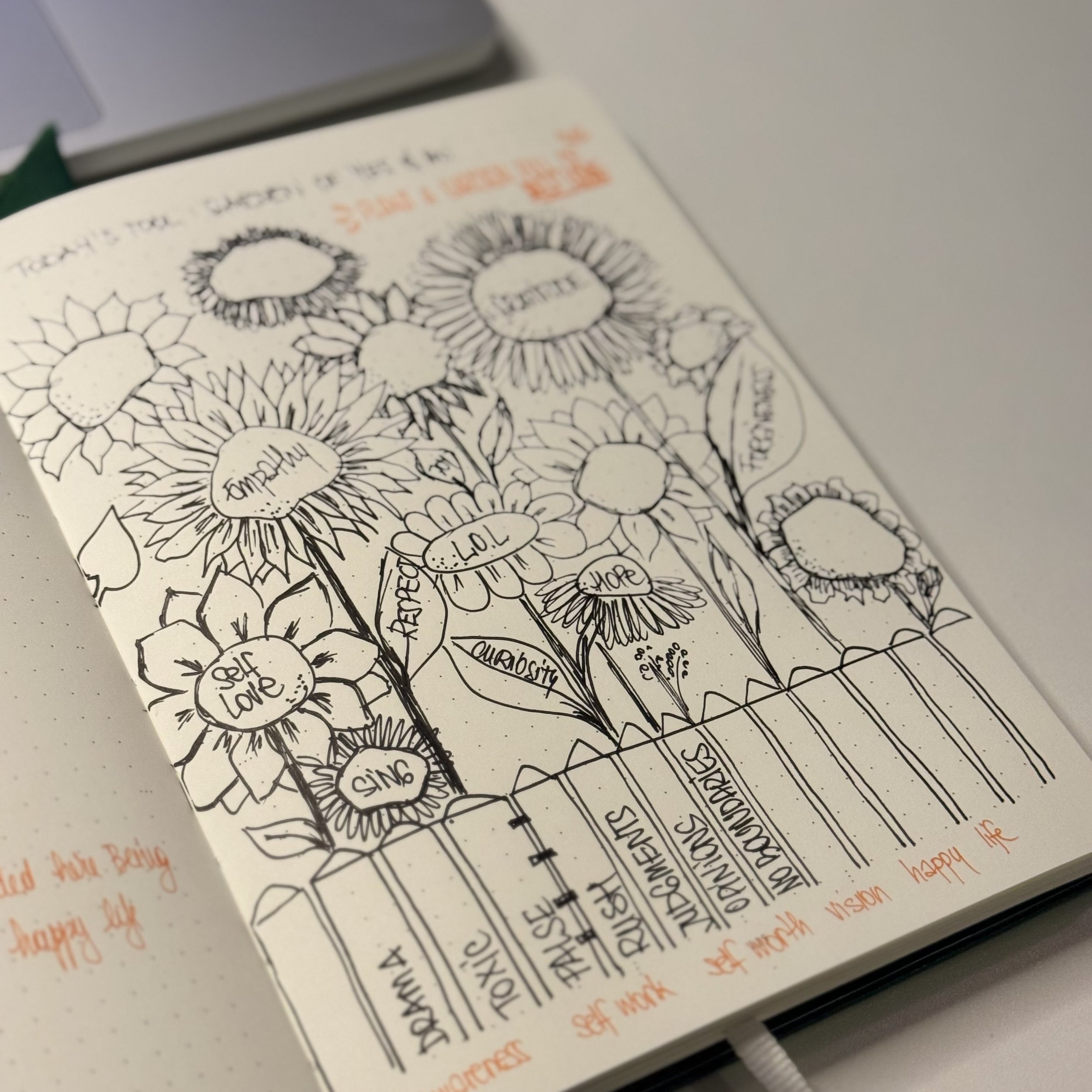
My experience as a journalling practitioner has taught me something slightly different. I have been keeping journals for more than a decade, but words are not my only entry point. In my 30-Day Journalling Challenges, I have invited people to use doodles, photographs, music, metaphors and objects. Sometimes the hand or the eye notices something before the articulate mind is ready to explain it.
Reflection is a muscle that can be trained. When I invite my coaching clients to explore photos as visual metaphors, I do so because selecting a photograph may already be a reflective act. The person has paused, noticed and chosen: this is what asks for my attention today. Writing may help articulate that choice, but the words are not necessarily the decisive ingredient. The same is true of taking pictures daily as part of a reflective practice.
Stopping to explore the potential of a photo already makes the moment more spacious, and it still requires attention, connection, relationship or environmental awareness. For a senior executive, an image can interrupt a familiar, polished leadership story. For a young professional, it can offer a less intimidating route into reflection. A coach or mentor can use an object as a third point of attention, rather than placing the person under examination.
Yesterday, during a mentoring conversation, I invited the coach I was working with to use an image as a reflection tool: look, choose, write. You can try it too.
Notice one image in your surroundings: a doorway, a tree, a shadow, a coffee cup or an object on your desk. Photograph or sketch it, then write no more than 100 words:
What drew your attention?
What does this image allow you to say indirectly about your client or your practice?
What conversation or small action might follow from this moment?
The meaning belongs to the person who chose the image. A bridge does not automatically mean transition; a dark colour does not diagnose sadness. In all my roles, I prefer to ask rather than interpret.
Privacy also needs thought. If you do this exercise outdoors or in a shared space, avoid photographing identifiable people, confidential documents or sensitive locations. Check whether your device automatically uploads images to a shared or cloud account. In workplace programmes, participation should be voluntary, and the image should remain private unless the person actively chooses to share it.
Arts-based coaching scholars Beth Clare McManus and Sally Waters describe the need for an ongoing “reflethical” practice: reflection and ethics held together, especially when creative methods evoke unexpected material. Their model is conceptual rather than based on outcome evidence, but its warning is useful: playful methods can open serious territory.
If you are a practitioner thinking of bringing photography into your work, keep one more thing in mind. If an image activates trauma, dissociation or significant distress, another prompt is not automatically the answer. Coaching and journalling are not therapy, and an appropriately qualified mental-health professional may be needed.
The page still matters. It gives attention a form we can revisit. But sometimes the first sentence is not made of words. It is the moment we stop and see what we have been passing every day.