What Creating a Celebration Challenge Invited Me to Notice
I write entirely to find out what I’m thinking, what I’m looking at, what I see and what it means. What I want and what I fear
Joan Didion
While in Supervision school, I notice my eagerness to move towards new opportunity, after a win, an end, a milestone. My restfulness had nothing to do with the process it was just my way of not stoping to celebrate - cause the overachiever in me - stops only to locate the next invitation.
When I created the September journaling challenge, I wanted to offer a space for celebration in its many forms: noticing, savouring, acknowledgement, gratitude and recognition. As I shaped the questions, another invitation emerged: to look at my own relationship with what I was asking others to explore.
It is easy to write, “Where are you further along than you give yourself credit for?” It asks something different of me when I pause and answer it myself. Can I acknowledge my progress without immediately adding what I still need to learn? Can I let something be enough for today?
Creating this challenge brought me closer to the questions behind the questions.
I began with noticing because celebration needs our attention. In professional life, we become practised at identifying gaps, solving problems and preparing for what comes next. These abilities serve us. I also wonder what disappears when they become our only way of looking.
The ordinary pleasure of a coffee. Someone’s patience. A conversation in which we stayed present. The boundary we managed to express. None of these needs to become a milestone before it deserves a place on the page.
From the perspective of creating the challenge, this was a learning about pace, something I practice mindful for some years now, but what about unconscious? Before inviting people into deeper reflection, I wanted to make room for looking around, collecting small moments and noticing what the body enjoys. Depth can begin with something ordinary, when we give it enough attention.
The movement from noticing to savouring raised another question for me: how much room do we allow a good experience to occupy?
We can recognise that something went well and still rush past it. We can receive appreciation and explain it away. The invitation to pause for ten seconds, or simply say, “Thank you. I appreciate you saying that,” asks us to notice our response. What makes receiving comfortable? What makes us want to shrink?
Here, reflection becomes reflexive. I look at the experience, and I also examine how my habits, beliefs and expectations shape what I allow myself to receive.
As a coach and someone creating reflective spaces, I need to bring that same curiosity to my design. What assumptions am I making about celebration? Am I giving people enough choice? Does my invitation leave room for someone whose September has been difficult?
This mattered particularly when writing about experiences that did not work out. I wanted space to honour effort, courage or learning while keeping the disappointment visible. “Both can be true” became an important part of the journey. Nobody needs to turn pain into a useful lesson on demand.
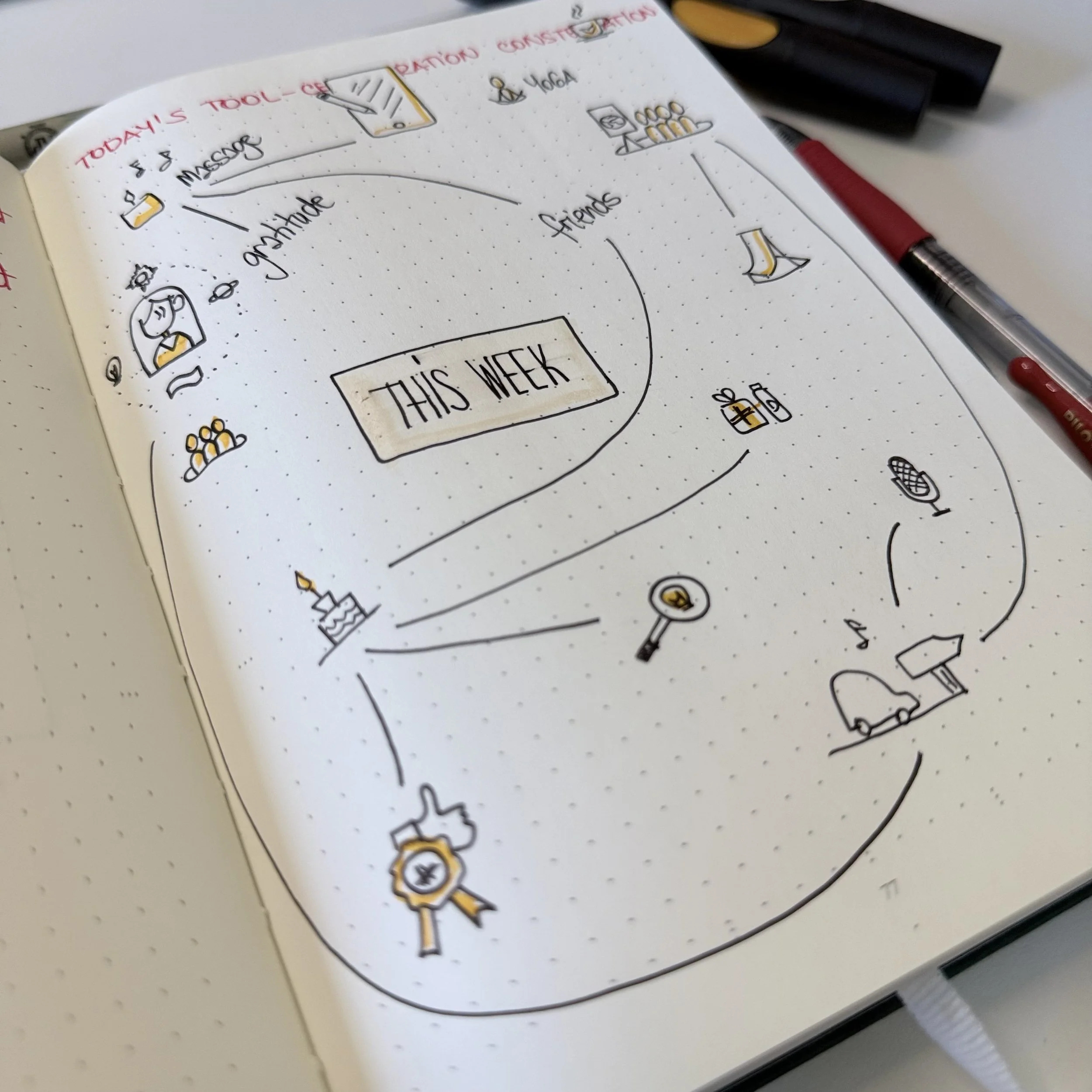
The creative invitations also carried a learning for me. A doodle, a song, a photograph or a few colours can offer another way into an experience. Sometimes words arrive later. Sometimes a small drawing is enough. In designing these pages, I wanted to leave room for different forms of expression, including quiet ones.
If you would like to try something today, draw three small frames. In one, place an ordinary pleasure. In another, acknowledge an effort nobody saw. In the third, write the name of someone whose contribution mattered. Pause with each before moving on.
My learning from creating this challenge is a question I want to keep close: can I practise the permission I offer others?
It also asks me to recognise the relationships and conditions that support my work, alongside the effort I bring myself.
Permission to notice. To receive. To recognise progress without qualification. To celebrate in a way that feels like me.
And to allow what is already here to matter, even while life remains unfinished.