Coaching supervision versus coaching mentoring
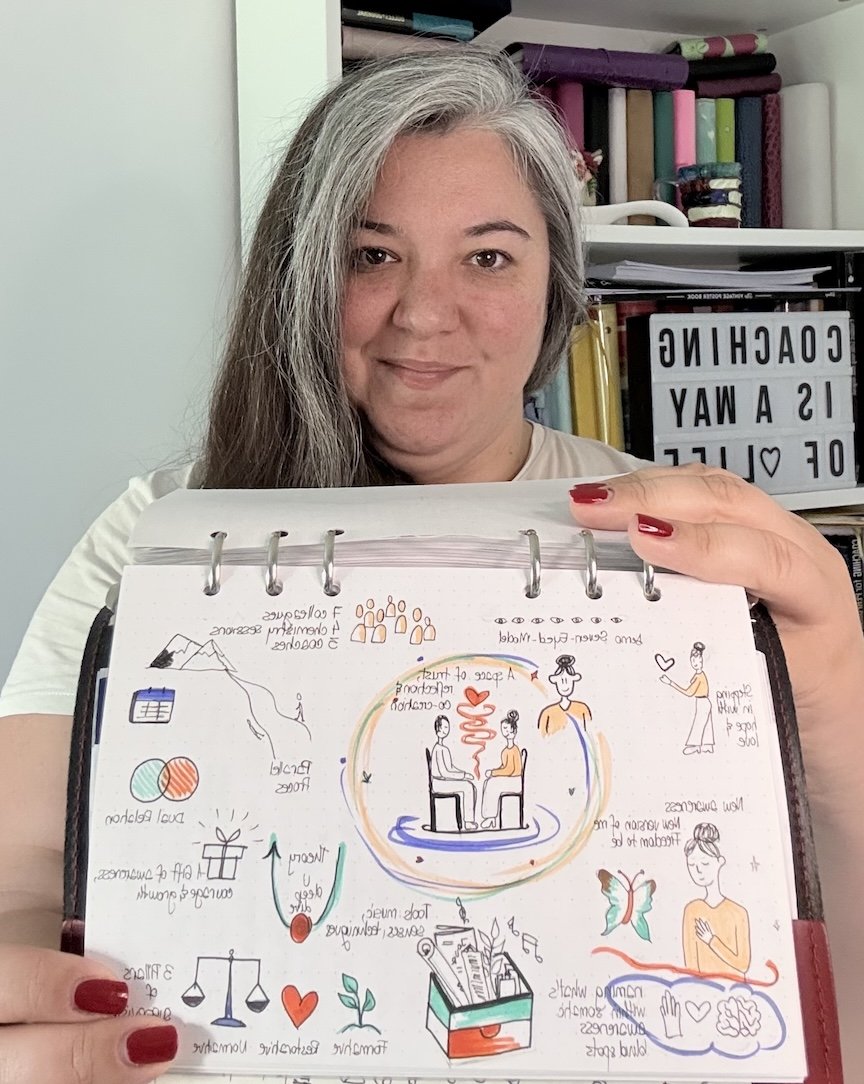
Who I am is how I supervise
Edna Murdoch & Elaine Patterson
Becoming a coaching supervisor I get a lot of questions between the difference from coaching supervision and coaching mentoring. And being a mentor coach and a coach for so long it has been a legitimate question for me as well.
It took me just a few months to understand the difference between them. In supervision I stay with the coach as they explore their practice as a whole - self-care, burnout, fostering resilience, coach's internal process, reconnecting the practitioner to their core purpose, we evaluate boundaries, contracting, and systemic decision-making and professional identity.
In mentor coaching together with the coach we focus on coaching competencies and performance, ethical guidelines and professional standards set by bodies like the EMCC, ICF or Association for Coaching.
Supervision is a space where we explore about Being - who the coach is while coaching their clients, what is happening in their being while in that process.
While Mentoring is about Doing - how the coach is practicing coaching and how their skills, methods and competencies show up in the process with the client.
And having these 2 on the table - it was clear for me that a coach can be highly skilled and still struggle in their practice. And this became clear and clear when I started my practice as a supervisor.
A coach may demonstrate excellent competencies, ask powerful questions, and contract effectively with clients. Yet they may also experience self-doubt, feel emotionally impacted by client stories, struggle with boundaries, or find themselves repeatedly drawn into certain dynamics. These are not necessarily competency issues; they are supervision conversations and a trained supervisor stays with you in this space, containing you while you grow.
A coach may have a deep level of self-awareness and strong reflective capacity, but still benefit from focused feedback on their coaching skills, presence, listening, or alignment with professional standards. These are mentoring conversations. And a good mentor will support you to develop even more in this space.
Neither is more important than the other. They simply serve different purposes. I often share that for a clean development one person should have a coach, a mentor and a supervisor and these 3 people should be different: different lenses, views and approaches make the coach richer and a container of their collective wisdom.
I often think of mentoring as helping a coach sharpen their instrument, while supervision helps them understand the musician holding the instrument.
Mentoring asks:
What are you doing?
How effective is it?
Which competencies are being demonstrated?
Where can your coaching practice improve?
Supervision asks:
Who are you being in your practice?
What assumptions, emotions, or patterns are influencing your work?
What is happening beneath the surface?
Who are you when you meet this client?
As I am looking at the professionals around me I feel that most mature coaching practices often include both. Mentoring supports excellence in performance, while supervision supports sustainability, resilience, reflexivity and depth. One develops the coach's capability; the other develops the coach's capacity.
And perhaps that is why I no longer see supervision and mentoring as alternatives. They are partners. The come together to support the coaches not only become better at coaching, but become more conscious practitioners of their craft.