..nobody can stand truth if it is told to him. Truth can be tolerated only if you discover it yourself because then, the pride of discovery makes the truth palatable.”
― Fritz Perls
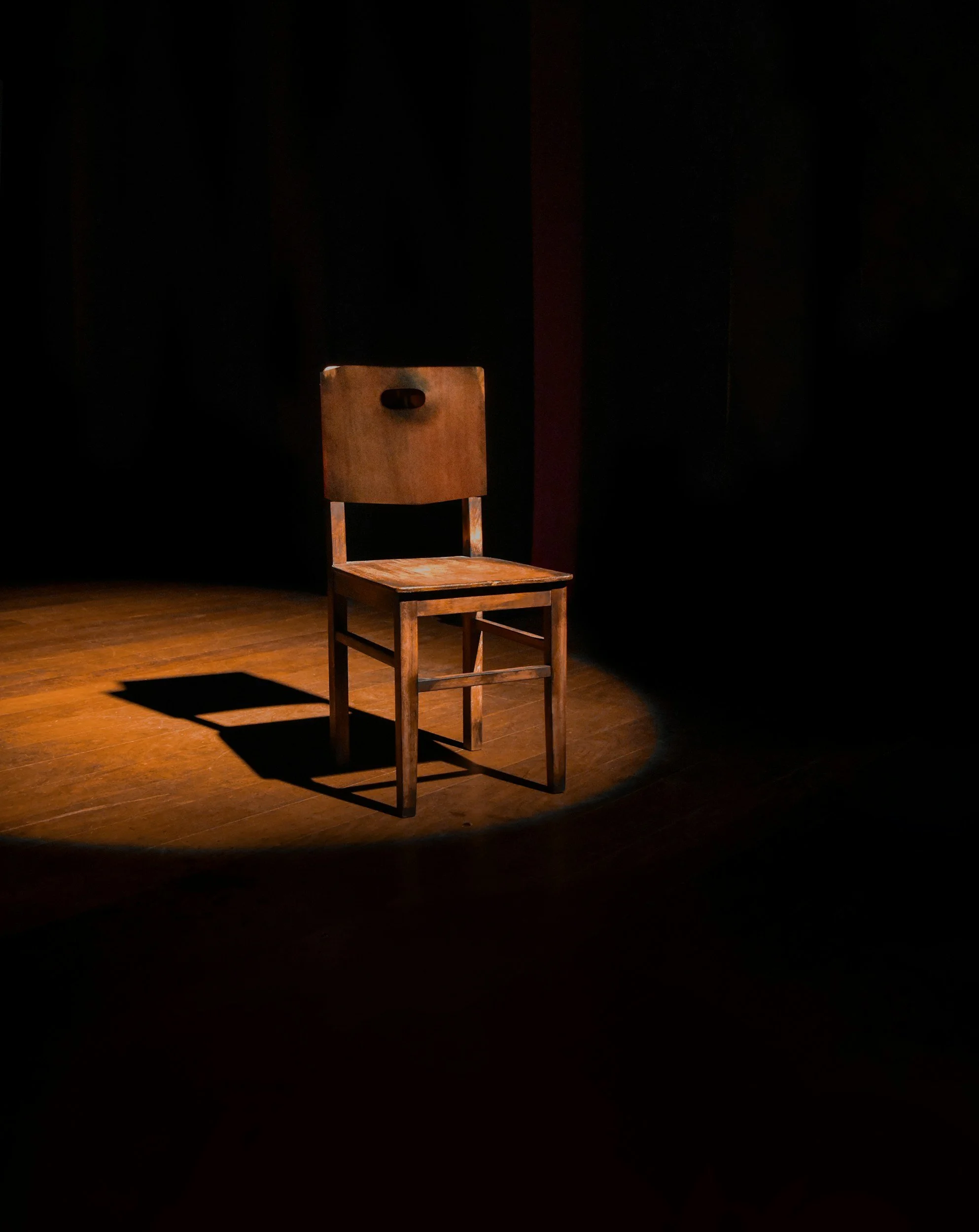
In a recent TEAM Experience, I introduced two empty chairs into the room.
One carried the word ASSUME: a reminder of how quickly assumptions can become private facts, creating a narrative we have not checked with others.
The other carried RELATION: the relationship between the people in the room, a third entity shaped by everyone and belonging to no single person.
The chairs gave abstract ideas a physical place. People could look towards them, refer to them and remember them after the explanation had passed. The room itself became part of how the team thought.
As I write this, I realise how often the empty chair has appeared in my own learning. I have encountered it in several of my training programmes, including as a tool for coaching, mentoring, supervision and team coaching. I also introduce it when teaching on PwC’s Business Coaching Diploma.
In Gestalt chairwork, a person may imagine someone, or an aspect of themselves, in another chair and speak directly to them. They may then change seats and respond from that position. Attention stays with what happens in the present: the words, feelings, pauses, gestures and bodily sensations that emerge during the exchange.
This is what interests me as a coach: the possibility of making something available for dialogue through metaphor, movement and attention to what emerges from a different position.
In team coaching, I might draw on this principle when a team says: “We want people to challenge decisions, but we cannot afford to slow down.”
Before deciding how to resolve that tension, we might give each position a place, using a chair to represent it, and explore what each is trying to protect. What does speed make possible? What does questioning a decision make possible? What might the team lose when either position dominates?
The purpose is to help the team understand its working patterns and assumptions, so that people can make choices together with a clearer understanding of one another’s concerns and beliefs.
The chairs in my TEAM Experience served a simpler purpose. They remained shared reference points. Assume invited attention to what we might be treating as known. Relation gave a place to what was happening between people.
The relationship-as-third-entity framing came from my ORSC lens. The Gestalt connection lies in attending to present experience and making room for dialogue.
From there, I might ask: “What are we assuming here?” Or: “If our relationship could speak about this conversation, what might it ask us to notice?”
Any answer to that second question remains a perspective offered by a team member. It needs to be explored with others, rather than accepted as the relationship’s definitive truth.
The same applies when a chair represents an absent colleague, customer or stakeholder. Imagining their perspective can reveal questions we need to ask them. It cannot replace hearing from them.
An object can also offer a shared focus when attention is concentrated on the person who speaks most readily or holds the highest rank. Whether this widens participation depends on how the conversation is held. A chair does not remove hierarchy.
If you are a coach considering this approach, notice who defines what the chair represents, whose interpretation becomes accepted and who feels able to disagree. A metaphor intended to open a conversation can also close it if one person is allowed to decide what it means for everyone.
I enjoy working with space in coaching. Even when I feel quite comfortable in my own chair, I often notice that moving to another position changes what I pay attention to. Different words emerge. A previously overlooked detail becomes visible. I find myself reflecting on what becomes available when we physically change position.
Drawing on that experience, here is an invitation to give different perspectives a place.
Choose a current professional tension and create three positions using chairs, sheets of paper, sticky notes, pictures or sketches. Place them in different parts of the room so that you can move between them, if that is comfortable and accessible for you.
ME: What am I noticing, needing and assuming?
US: What might be happening between us? What would I need to check with others?
SYSTEM: What does the wider context reward, restrict or leave unsaid? Whose perspective is missing?
As you explore each position, ask: “From here, what becomes visible?”
Notice any changes in your words, attention or physical experience without rushing to explain them. Then return to your own position. Separate what you observed from what you imagined, and identify one question to take into a real conversation. What needs checking, and with whom?
In group work, agree the purpose and boundaries first. Participation and movement should be optional, with accessible alternatives and no expectation of personal disclosure. Stay within the coaching agreement and your competence. If significant distress emerges, pause and consider what support is appropriate.
The empty chair is never entirely empty once a meaning has been placed there. Used carefully, it can help a team stay curious about what is happening between them and what their usual explanations leave out.
If there were one more chair in your next team conversation, what would you give a place to, and what would you need to ask the people already in the room?
If you want to know more about the Wisdom of space search the references from quantum physics.
Photo: Allec Gomes